I begin this section with a quote from "Cell Wall Deficient Forms: Stealth Pathogens" by Lida Mattman.
"Wall-deficient bacteria are called fungoidal as they produce yeast-like (emphasis added) budding spheres or simulate molds with elongated branching threads. (See chondrothecit and free chondrit plates, respectively). How, then, does one solve the dilemma of recognizing a wall-deficient fungus ? One can start with the vital activity in a fungal filtrate of Candida Albicans where the tiny 0.15-µm particles cannot possibly possess the wide hard wall of the parent. Colonies developing are usually comprised of twisted Gram-negative skeins so delicate that their course is interrupted by submicroscopic gaps. These fine threads of growth have never been described as part of the classic growth of fungi. (Emphasis added where bolded)."
The above description corroborates the findings of Dr. Günther Enderlein when he described such coccoidal manifestations as being either primitive bacterial variants or the most primitive mycelian strands.
Species of microorganisms which exhibit fungal variants in tissue (in vivo) are only microscopically visible in the blood as the most elementary and minute primitive spore forms, ranging in size up from approximately 0.15 microns. The notion that anyone is viewing fungus balls in phase contrast or darkfield is technically a complete misconception, as the forms which are being regarded as fungal developments are appearing in an alkaline milieu in the blood which will not support the fungal stages of development.
This is not to say that the microorganisms may not be a species that can represent fungal developments elsewhere in the body. But this species specificity is indeterminable by viewing the fresh live blood, as there is not a way to distinguish which species is being viewed without culturing it out through the use of a medium, or by aging or heating the sample, under some conditions. This process changes the phase of development into phases that do not appear, again, in the alkaline milieu of the blood.
The forms that are being viewed (and mistaken for fungus stage) are actually colloid thecits, thrombocytes, chondrits, ascits, synascits, and mychits, all of which are part of the bacterial phase of development, which develops in an alkaline milieu. Also, the cell wall deficient forms, chondrits which are symplastic, are mistaken for fungal appearances. These chondrits do represent a fermentative process, but not at the level of a fungal appearance. They are even an earlier stage appearance than the most primitive cell wall mediated bacterial variants. The species, again, are unspecified upon appearance, as they are the same common stages that appear in many species of microorganism developmental cycles.
©Copyright 1997 by Michael Coyle, Petaluma, California, USA(Explore Issue: Volume 8, Number 3)
Monday, July 24, 2006


FUNGUS
FUNGUS
The species specific understanding of, and difference between bacterial phase and fungal phase developments in blood pictures.
©Copyright 1997 by Michael Coyle, Petaluma, California, USA(Explore Issue: Volume 8, Number 3)
Diseases of the skin, digestive organs, urogenitary tract, mouth, etc. are caused by the multiplication and spread of fungal microorganisms known as mycelia. Mycoses (fungal infections) range in degree from unnoticed to fatal. They are directly related to asthma and allergic alveolitis reactions. They are dealt with by the immune system and competition from other microbes or earlier developmental phases of their own cyclogeny.
Fungal infections can be classified as;
Superficial -- those that effect hair, skin, nostrils, genitals, and oral mucosa
Subcutaneous -- those which occur beneath the skin
Deep -- those which effect the internal organs, lungs, liver, bones, lymph, brain, heart, and urinary tract
These infections often occur in those on long-term antibiotic therapies, corticosteroids, and immunosuppressant drugs. This type of opportunistic infection is common in those with the acquired immunodeficiency syndrome, commonly known as AIDS, and also CFIDS (chronic fatigue syndrome).
Some of these fungal forms are received from the environment, are transmitted sexually, or are transmitted through mother's milk (Candida albicans). Candida remains in non-virulent phases of development until the terrain allows for its progression into more complex pathogenic forms. The efficacy of many of the SANUM fungal remedies is based on the sexual activity of the particular species of microorganisms (and/or the benign effect altogether, through competition, on the terrain) which is initiated through the process of reinstalling the microbial flora in the body in it's apathogenic earlier phases of development. The flora that was installed then copulates with the pathogenic variety and shares the sexual information of the earlier phases, which, all things being equal (terrain modulation, removal of stressors, proper diet, lifestyle, etc.) causes the pathogenic form to convert or be reduced to the apathogenic variety. It is believed that the pathogens are also reduced in valence through the actual activity of the copulatory process.
The main causes of pathogenic albicans overgrowth are indiscriminate antibiotic application and dental inclusions from mercury tooth amalgams. Other factors include addictions to coffee, chocolate, drugs, unsafe sexual pratices, immuncompromisation, stress, chemicals, radiation, improper diet, etc.
The fungal overgrowth occurs because its natural competitors have been removed, in the case of antibiotic usage. In the case of dental amalgams or metals, it is due to decreased immunity from immunocompromisation. The candida also adsorbs the mercury in the gut, thereby serving the function of keeping it from moving deeper in the system, to some degree. A good inclusion in a program of remedies for alleviation of mercury toxicity in the nervous system and brain is broken cell wall chlorella, because not only is it similar to the fungus in that it adsorbs the mercury, but also carries it away.
The species specific understanding of, and difference between bacterial phase and fungal phase developments in blood pictures.
©Copyright 1997 by Michael Coyle, Petaluma, California, USA(Explore Issue: Volume 8, Number 3)
Diseases of the skin, digestive organs, urogenitary tract, mouth, etc. are caused by the multiplication and spread of fungal microorganisms known as mycelia. Mycoses (fungal infections) range in degree from unnoticed to fatal. They are directly related to asthma and allergic alveolitis reactions. They are dealt with by the immune system and competition from other microbes or earlier developmental phases of their own cyclogeny.
Fungal infections can be classified as;
Superficial -- those that effect hair, skin, nostrils, genitals, and oral mucosa
Subcutaneous -- those which occur beneath the skin
Deep -- those which effect the internal organs, lungs, liver, bones, lymph, brain, heart, and urinary tract
These infections often occur in those on long-term antibiotic therapies, corticosteroids, and immunosuppressant drugs. This type of opportunistic infection is common in those with the acquired immunodeficiency syndrome, commonly known as AIDS, and also CFIDS (chronic fatigue syndrome).
Some of these fungal forms are received from the environment, are transmitted sexually, or are transmitted through mother's milk (Candida albicans). Candida remains in non-virulent phases of development until the terrain allows for its progression into more complex pathogenic forms. The efficacy of many of the SANUM fungal remedies is based on the sexual activity of the particular species of microorganisms (and/or the benign effect altogether, through competition, on the terrain) which is initiated through the process of reinstalling the microbial flora in the body in it's apathogenic earlier phases of development. The flora that was installed then copulates with the pathogenic variety and shares the sexual information of the earlier phases, which, all things being equal (terrain modulation, removal of stressors, proper diet, lifestyle, etc.) causes the pathogenic form to convert or be reduced to the apathogenic variety. It is believed that the pathogens are also reduced in valence through the actual activity of the copulatory process.
The main causes of pathogenic albicans overgrowth are indiscriminate antibiotic application and dental inclusions from mercury tooth amalgams. Other factors include addictions to coffee, chocolate, drugs, unsafe sexual pratices, immuncompromisation, stress, chemicals, radiation, improper diet, etc.
The fungal overgrowth occurs because its natural competitors have been removed, in the case of antibiotic usage. In the case of dental amalgams or metals, it is due to decreased immunity from immunocompromisation. The candida also adsorbs the mercury in the gut, thereby serving the function of keeping it from moving deeper in the system, to some degree. A good inclusion in a program of remedies for alleviation of mercury toxicity in the nervous system and brain is broken cell wall chlorella, because not only is it similar to the fungus in that it adsorbs the mercury, but also carries it away.
Saturday, July 22, 2006
Antifungal Treatment Wins FDA Approval
TUESDAY, Feb. 21 (HealthDay News) -- A drug designed to treat yeast-like fungal infections that often strike hospital patients and people with compromised immune systems has been approved by the U.S. Food and Drug Administration.
Pfizer's Eraxis (anidulafungin) treats infections caused by Candida fungus, which often affects the bloodstream, esophagus, and abdominal cavity, the FDA said. Candidemia, a bloodstream infection caused by the fungus, is among the most deadly hospital-acquired infections of its type, with a fatality rate of about 40 percent, Pfizer said in a statement.
Candidemia affects about 1 in 5,000 people in the United States -- an estimated 60,000 cases each year. The infection causes patients to spend an average of about 10 additional days in the hospital, at a cost of about $39,000 per patient, Pfizer said.
The most common adverse side effects seen during clinical testing of the new drug included diarrhea, mild elevations in certain liver enzymes, headache, and mild allergic reactions, the FDA said.
More information
To learn more about Candida infections, visit the U.S. Centers for Disease Control and Prevention.
Last reviewed: 02/21/2006 Last updated: 02/21/2006
Pfizer's Eraxis (anidulafungin) treats infections caused by Candida fungus, which often affects the bloodstream, esophagus, and abdominal cavity, the FDA said. Candidemia, a bloodstream infection caused by the fungus, is among the most deadly hospital-acquired infections of its type, with a fatality rate of about 40 percent, Pfizer said in a statement.
Candidemia affects about 1 in 5,000 people in the United States -- an estimated 60,000 cases each year. The infection causes patients to spend an average of about 10 additional days in the hospital, at a cost of about $39,000 per patient, Pfizer said.
The most common adverse side effects seen during clinical testing of the new drug included diarrhea, mild elevations in certain liver enzymes, headache, and mild allergic reactions, the FDA said.
More information
To learn more about Candida infections, visit the U.S. Centers for Disease Control and Prevention.
Last reviewed: 02/21/2006 Last updated: 02/21/2006
Clinical Trials Update: Aug. 26, 2005
(HealthDay News) -- Here are the latest clinical trials, courtesy of CenterWatch:
Yeast Infections
If you are 18 years of age of older and are experiencing itching, burning and/or irritation in the vaginal area, you may qualify for a clinical research study on yeast infection. All office visits, medical evaluations and study medications related to this study will be provided at no charge. Research site located in Clarksville, Tenn.
More Information
Please see
www.centerwatch.com/patient/studies/cat249.html.
-----
Ulcerative Colitis
Multi-Specialty Research Associates of NC is conducting a clinical research trial of an investigational medication for maintenance of ulcerative colitis remission. Qualified participants will receive study-related physical exams, study-related lab tests and study medication. Research site located in Raleigh, NC.
More Information
Please see
www.centerwatch.com/patient/studies/cat152.html.
-----
Chronic Back Pain
Coastal Medical Research Group, Inc., is conducting a clinical trial in which eligible participants will receive all study-related physician visits, laboratory services, and study medications at no charge. You may qualify if you are 21-75 years of age and have been diagnosed with osteoarthritis of the hip/knee or chronic low back pain. Research site located in San Luis Obispo, Calif.
More Information
Please see
www.centerwatch.com/patient/studies/cat19.html.
-----
Copyright 2005 CenterWatch.
All rights reserved.
Last reviewed: 08/26/2005 Last updated: 08/26/2005
Yeast Infections
If you are 18 years of age of older and are experiencing itching, burning and/or irritation in the vaginal area, you may qualify for a clinical research study on yeast infection. All office visits, medical evaluations and study medications related to this study will be provided at no charge. Research site located in Clarksville, Tenn.
More Information
Please see
www.centerwatch.com/patient/studies/cat249.html.
-----
Ulcerative Colitis
Multi-Specialty Research Associates of NC is conducting a clinical research trial of an investigational medication for maintenance of ulcerative colitis remission. Qualified participants will receive study-related physical exams, study-related lab tests and study medication. Research site located in Raleigh, NC.
More Information
Please see
www.centerwatch.com/patient/studies/cat152.html.
-----
Chronic Back Pain
Coastal Medical Research Group, Inc., is conducting a clinical trial in which eligible participants will receive all study-related physician visits, laboratory services, and study medications at no charge. You may qualify if you are 21-75 years of age and have been diagnosed with osteoarthritis of the hip/knee or chronic low back pain. Research site located in San Luis Obispo, Calif.
More Information
Please see
www.centerwatch.com/patient/studies/cat19.html.
-----
Copyright 2005 CenterWatch.
All rights reserved.
Last reviewed: 08/26/2005 Last updated: 08/26/2005
Clinical Trials Update: Sept. 22, 2005
(HealthDay News) --
Here are the latest clinical trials, courtesy of CenterWatch:
Yeast Infections
If you're suffering from symptoms of yeast or a bacterial infection, such as vaginal itching, burning, or irritation you may qualify for this clinical trial. Volunteers should be generally healthy, at least 18 years old, not pregnant or lactating, agree to abstain from intercourse during treatment and agree to use an effective, non-prohibited form of birth control after treatment, if of childbearing potential. Research site located in San Diego, Calif.
More Information
Please see
http://www.centerwatch.com/patient/studies/cat249.html.
-----
Skin Cancer
The study medication is given by shallow injection under the skin next to each armpit and each groin. The injections are given every two weeks for the first five visits, then every four weeks for the rest of the year. There are a total of 15 injection visits. Patients showing no evidence of response at week 24 will receive no further treatment with Canvaxin, the study medication. Research site located in Tampa, Fla.
More Information
Please see
http://www.centerwatch.com/patient/studies/cat37.html.
-----
Bipolar Disorders
This study is seeking patients between the ages of 18 and 70 with a doctor's diagnosis of bipolar I disorder with manic or mixed episodes. Participants must meet be 18 to 70 with diagnosis of bipolar disorder (type I), manic or mixed episodes and in need of psychiatric treatment. Research sites located in Illinois and Oklahoma.
More Information
Please see
http://www.centerwatch.com/patient/studies/cat20.html.
-----
Copyright 2005
CenterWatch.
All rights reserved.
Last reviewed: 09/22/2005 Last updated: 09/22/2005
Here are the latest clinical trials, courtesy of CenterWatch:
Yeast Infections
If you're suffering from symptoms of yeast or a bacterial infection, such as vaginal itching, burning, or irritation you may qualify for this clinical trial. Volunteers should be generally healthy, at least 18 years old, not pregnant or lactating, agree to abstain from intercourse during treatment and agree to use an effective, non-prohibited form of birth control after treatment, if of childbearing potential. Research site located in San Diego, Calif.
More Information
Please see
http://www.centerwatch.com/patient/studies/cat249.html.
-----
Skin Cancer
The study medication is given by shallow injection under the skin next to each armpit and each groin. The injections are given every two weeks for the first five visits, then every four weeks for the rest of the year. There are a total of 15 injection visits. Patients showing no evidence of response at week 24 will receive no further treatment with Canvaxin, the study medication. Research site located in Tampa, Fla.
More Information
Please see
http://www.centerwatch.com/patient/studies/cat37.html.
-----
Bipolar Disorders
This study is seeking patients between the ages of 18 and 70 with a doctor's diagnosis of bipolar I disorder with manic or mixed episodes. Participants must meet be 18 to 70 with diagnosis of bipolar disorder (type I), manic or mixed episodes and in need of psychiatric treatment. Research sites located in Illinois and Oklahoma.
More Information
Please see
http://www.centerwatch.com/patient/studies/cat20.html.
-----
Copyright 2005
CenterWatch.
All rights reserved.
Last reviewed: 09/22/2005 Last updated: 09/22/2005
Health Tip: Symptoms of Yeast Infection
HealthDayNews) -- Yeast infections, while uncomfortable, are not dangerous. They're caused when the balance between the yeast organisms normally present in the vagina and other organisms is upset, according to Baystate Health System.
Common triggers are:
Common triggers are:
- Lowered resistance as a result of infection, stress, or illness.
- Diabetes.
- Pregnancy or birth control pills.
- Drugs or antibiotics taken for other infections.
Symptoms of a yeast infection include:
- Severe burning and itching.
- Swelling in the vulva.
- A white discharge.
- Painful intercourse.
If you think you have a yeast infection, see your doctor. The condition can be cured with antifungal medications taken over a period of three to seven days.
Last reviewed: 08/16/2005 Last updated: 08/16/2005
Sunday, July 16, 2006
Nail Fungus and Nail Salons, Even Celebrities Aren't Immune
For millions of suffers, nail fungus is an unsightly and potentially painful problem. Recently, nail salons have been in the news because of reports of unsanitary practices. Singer and American Idol judge, Paula Abdul went before the California Senate and Business Committee to urge them to pass legislation to provide stricter rules and regulations for nail salons in California. Abdul's concern stemmed from an incident in 2004, which had her in and out of hospitals for a year after a manicure gave her a nail infection. The infection had her thumb so sensitive that even the touch of hair on her hand made her scream. Nail fungus is a common infection that affects more than 2.5 million Americans annually.
The most common way that nail fungus is spread is by using utensils that haven't been properly sterilized. One California salon spread infection through more than 110 of their clients. The sources were spa chairs that hadn't been properly cleaned. This company wasn't thoroughly cleaning out the bowls on their spa chairs; as a result, microorganisms were growing inside the filters. The cleaning regulations for footbaths were vague, and didn't include instructions for cleaning the filters. When investigators checked behind the screens, they found that bacteria and other microorganisms were thriving. Even though this was an extreme case, it is indicative of what happens because of lax regulations throughout the industry. The most common infections that are passed from salons are fungal infections, specifically nail fungus. If you find yourself in a position where you have nail fungus, what are your options for eliminating it? You could try a topical over-the-counter medication, which you would just rub over the surface of the nail. This is typically a relatively inexpensive method for treating nail fungus.
The difficulty with a purely topical medicine is that, alone, it's virtually ineffective for treating the infection. It would only provide temporary relief from the pain and discomfort. The next option would be to go to your physician and get a prescription medication. This would actually get into your blood stream to treat the nail fungus from the inside out. Terbinafine is the antifungal medication that would be used to treat this infection and if you bought a generic brand of Terbinafine it would cost around $100 for a month supply. The side effects of Terbinafine vary and some can be staggering. They range from itching, rash, and diarrhea to change in vision, liver and even kidney damage.
If you are more interested in nutraceuticals and an all natural approach to medications, then you should consider Leucatin. Leucatin has both an oral and topical approach to eliminating the fungus. The topical treatment is sprayed directly onto the nail 3 times daily for 7 days. The oral treatment is taken twice daily for 7 days. For $67 you would receive enough product to rid yourself of nail fungus, and the best part is that these products are sold with a one year money back guarantee, to ensure that if you're unsatisfied with the product, you can return it, no questions asked.
Leucatin is a good choice for people who want to treat their fungal infections from the inside and out. Leucatin only takes a week to make nails look healthier and shinier; whereas, some of the other products could take you anywhere from 6 to 12 weeks before the nail would be healed. A person's nails are important to keep maintained. Trying a natural treatment would expedite the healing process, which will get you back to wearing sandals in no time! If you want more information on the product, Leucatin, simply go to http://www.leucatin.com.
Rachelle Ross INCREASE MEDIA
rachelle@selmedica.com 901-753-7588
http://www.leucatin.com
The most common way that nail fungus is spread is by using utensils that haven't been properly sterilized. One California salon spread infection through more than 110 of their clients. The sources were spa chairs that hadn't been properly cleaned. This company wasn't thoroughly cleaning out the bowls on their spa chairs; as a result, microorganisms were growing inside the filters. The cleaning regulations for footbaths were vague, and didn't include instructions for cleaning the filters. When investigators checked behind the screens, they found that bacteria and other microorganisms were thriving. Even though this was an extreme case, it is indicative of what happens because of lax regulations throughout the industry. The most common infections that are passed from salons are fungal infections, specifically nail fungus. If you find yourself in a position where you have nail fungus, what are your options for eliminating it? You could try a topical over-the-counter medication, which you would just rub over the surface of the nail. This is typically a relatively inexpensive method for treating nail fungus.
The difficulty with a purely topical medicine is that, alone, it's virtually ineffective for treating the infection. It would only provide temporary relief from the pain and discomfort. The next option would be to go to your physician and get a prescription medication. This would actually get into your blood stream to treat the nail fungus from the inside out. Terbinafine is the antifungal medication that would be used to treat this infection and if you bought a generic brand of Terbinafine it would cost around $100 for a month supply. The side effects of Terbinafine vary and some can be staggering. They range from itching, rash, and diarrhea to change in vision, liver and even kidney damage.
If you are more interested in nutraceuticals and an all natural approach to medications, then you should consider Leucatin. Leucatin has both an oral and topical approach to eliminating the fungus. The topical treatment is sprayed directly onto the nail 3 times daily for 7 days. The oral treatment is taken twice daily for 7 days. For $67 you would receive enough product to rid yourself of nail fungus, and the best part is that these products are sold with a one year money back guarantee, to ensure that if you're unsatisfied with the product, you can return it, no questions asked.
Leucatin is a good choice for people who want to treat their fungal infections from the inside and out. Leucatin only takes a week to make nails look healthier and shinier; whereas, some of the other products could take you anywhere from 6 to 12 weeks before the nail would be healed. A person's nails are important to keep maintained. Trying a natural treatment would expedite the healing process, which will get you back to wearing sandals in no time! If you want more information on the product, Leucatin, simply go to http://www.leucatin.com.
Rachelle Ross INCREASE MEDIA
rachelle@selmedica.com 901-753-7588
http://www.leucatin.com
Scientists develop fungus-fighting vaccine
A group of scientists in Italy have developed a vaccine with the potential to protect against fungal pathogens that commonly infect humans, according to a study by Torosantucci and colleagues in the September 5 issue of The Journal of Experimental Medicine. Although these fungi pose little threat to people with healthy immune systems, they can cause fatal infections in those whose immune systems have been weakened by cancer treatments or post-transplant immunosuppressive therapies. No anti-fungal vaccines are currently available.
The new vaccine was made of a sugar-like molecule called beta-glucan that is found on the cell wall of the fungus and that the fungus needs to grow and survive. To induce a robust immune response to the vaccine, the group attached the relatively innocuous beta-glucan to a protein called diptheria toxin that is known to stimulate the immune system and has been used in other human vaccines.
The vaccine protected rodents from fatal fungal infections by triggering the production of anti-beta-glucan antibodies. These antibodies stuck to the invading fungal cell wall and prevented the fungus from growing. The authors now plan to test the vaccine in humans and hope the results are equally promising.
Nickey Henryhenryn@rockefeller.edu212-327-8366
Journal of Experimental Medicine
http://www.jem.org/
The new vaccine was made of a sugar-like molecule called beta-glucan that is found on the cell wall of the fungus and that the fungus needs to grow and survive. To induce a robust immune response to the vaccine, the group attached the relatively innocuous beta-glucan to a protein called diptheria toxin that is known to stimulate the immune system and has been used in other human vaccines.
The vaccine protected rodents from fatal fungal infections by triggering the production of anti-beta-glucan antibodies. These antibodies stuck to the invading fungal cell wall and prevented the fungus from growing. The authors now plan to test the vaccine in humans and hope the results are equally promising.
Nickey Henryhenryn@rockefeller.edu212-327-8366
Journal of Experimental Medicine
http://www.jem.org/
How The Body Recognizes A Fungus Among Us
The fungus Candida albicans can cause a wide variety of infections, ranging from mucosal infections in generally healthy individuals to life-threatening infections in persons with impaired immunity. Beating this infection requires mononuclear immune cells such as neutrophils and macrophages to recognize the fungus, ingest it, and kill it by releasing proinflammatory cytokines that activate the immune response. In a study appearing online on May 18 in advance of print publication in the June issue of the Journal of Clinical Investigation, Mihai Netea and colleagues from Radboud University Nijmegen Medical Center, The Netherlands, show how mononuclear cells recognize the cell surface of C. albicans.
They reveal that this process involves multiple recognition systems that recognize various components within the layers of the fungal cell wall. The authors examined mutant strains of C. albicans that had specific defects in the mannosylation of cell wall proteins. They demonstrated that 3 components of the fungal cell wall are involved in the recognition by monocytes/macrophages and for the subsequent activation of proinflammatory cytokine release:
(i) N-linked mannans;
(ii) O-linked mannans; and
(iii) beta-glucans. The N-linked and O-linked mannosyl groups of glycoproteins of the outer surface of the cell wall were responsible for most of the cytokine-stimulating activity of the fungal cell. This was achieved by specific interaction of the N-linked mannosyl residues with the mannose receptor, and of the O-linked mannosyl residues with Toll-like receptor 4. Residual cytokine production was mediated by beta-glucans interacting with a protein called dectin-1, and most likely in cooperation with Toll-like receptor 2. This study will serve as a model for future studies of how the immune system recognizes other microorganisms.
TITLE: Immune sensing of Candida albicans requires cooperative recognition of mannans and glucans by lectin and Toll-like receptors.
View the PDF of this article at:the-jci.org/article.php?id=27114
Brooke Grindlingerpress_releases@the-jci.org
Journal of Clinical Investigation
http://www.jci.org
They reveal that this process involves multiple recognition systems that recognize various components within the layers of the fungal cell wall. The authors examined mutant strains of C. albicans that had specific defects in the mannosylation of cell wall proteins. They demonstrated that 3 components of the fungal cell wall are involved in the recognition by monocytes/macrophages and for the subsequent activation of proinflammatory cytokine release:
(i) N-linked mannans;
(ii) O-linked mannans; and
(iii) beta-glucans. The N-linked and O-linked mannosyl groups of glycoproteins of the outer surface of the cell wall were responsible for most of the cytokine-stimulating activity of the fungal cell. This was achieved by specific interaction of the N-linked mannosyl residues with the mannose receptor, and of the O-linked mannosyl residues with Toll-like receptor 4. Residual cytokine production was mediated by beta-glucans interacting with a protein called dectin-1, and most likely in cooperation with Toll-like receptor 2. This study will serve as a model for future studies of how the immune system recognizes other microorganisms.
TITLE: Immune sensing of Candida albicans requires cooperative recognition of mannans and glucans by lectin and Toll-like receptors.
View the PDF of this article at:the-jci.org/article.php?id=27114
Brooke Grindlingerpress_releases@the-jci.org
Journal of Clinical Investigation
http://www.jci.org
Wednesday, July 05, 2006
Many fungi also produce biologically active compounds that are useful in manufacturing.
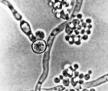 Many fungi also produce biologically active compounds that are useful in manufacturing. These compounds include alcohols—such as ethanol and glycerol produced during fermentation—and plant growth regulators—such as giberellic acid, which is used in the promotion of plant and fruit development. Fungi are extremely important in the production of antibiotics; for example, penicillin, griseofulvin, cyclosporine, and cephalosporin are used to fight bacterial and fungal diseases worldwide.Fungi are becoming an increasingly important tool in cleaning the environment.
The accumulation of pesticides and other chemicals in the environment is destroying many ecosystems, and placing many animal and plant species at risk. A number of fungi are used in bioremediation, in which the fungi are mixed with polluted water or soil, where they decompose the organic material in pollutants and, in the process, detoxify them. Fungi employed in this effort include many that are commonly found in soils, such as Aspergillus, Fusarium, Rhizopus, Mucor, Penicillium, and Trichoderma. Fungi also have been used successfully to control insects, fungus pathogens, roundworms, and other organisms that cause damage and disease to agricultural crops.
more info:
Mycotoxins are poisons produced by fungal growth in cereals, nuts, fruits, and vegetables.
 Mycotoxins are poisons produced by fungal growth in cereals, nuts, fruits, and vegetables. More than 100 species of fungi produce these toxins. The most common mycotoxin is aflatoxin, produced by Aspergillus flavus and Aspergillus parasiticus. Commonly found on corn, peanuts, and tree nuts, the toxin also can be transmitted to humans through the milk, meat, or eggs of animals fed contaminated grains. Aflatoxin is the most potent carcinogen, or potentially cancer-causing agent, yet discovered.
Other mycotoxins include trichothecenes and zearalenone, compounds known to injure the intestines, bone marrow, lymph nodes, spleen, and thymus. They are produced by species of Fusarium that grow on grain, straw, or hay stored while damp. Occasionally, circumstances prevent the harvesting of grains during the autumn, and the grains lie dormant in the damp fields until they are harvested in the spring. These grains are especially vulnerable to trichothecenes and zearalenone contamination. A large outbreak of trichothecenes contamination occurred in Russia in early 1944 among hungry peasants who had been searching the winter fields for unharvested wheat and millet.Scientific classification: Fungi are classified in the Kingdom Fungi, also known as the Kingdom Mycetae. The kingdom has five main phyla: Chytridiomycota, Zygomycota, Ascomycota, Basidiomycota, and Deuteromycota.
more info:
Histoplasmosis is caused by the yeast like fungus
 Histoplasmosis is caused by the yeast like fungus Histoplasma capsulatum, which grows in pigeon, bat, and chicken droppings.
Contracted by the inhalation of dust from animal droppings, by ingestion, or through the skin. The fungus causing histoplasmosis lives as a parasite in certain tissue and blood cells of the infected person.
An infection in the respiratory system is similar to tuberculosis—small spots form in the lungs—although these lesions heal on their own. A progressive form typically invades the bone marrow and is rapidly fatal.
Aspergillosis is an infection of the skin, nasal sinuses, and lungs or other internal organs caused by molds of the genus Aspergillus. The disease, contracted by the inhalation of spores, occurs most often among agricultural workers.
Itching and pain are frequent symptoms, and if scratching is prolonged, the skin may thicken and become gray or black. A virulent type of pneumonia is caused by the yeast like fungus Pneumocystis carinii, particularly prevalent in people with compromised immune systems, such as AIDS patients.
more info:
Fungi cause a number of human respiratory diseases.
 Fungi cause a number of human respiratory diseases. Coccidioidomycosis is caused by the yeast Coccidioides immitis. Although typically contracted by the inhalation of dust containing yeast spores, the fungus may also be introduced through the skin from infected soil. Initial symptoms may resemble the flu, with fever, cough, and possibly a skin rash, and the infection usually runs its course without specific treatment. In rare cases, the fungus penetrates internal tissues, such as the bones, joints, and brain, producing tumors that later form abscesses or ulcers. No treatment is available that can halt the course of this form of the disease.
Tuesday, July 04, 2006
I knew something was wrong with me, but nobody else did.
 I knew something was wrong with me, but nobody else did. I am 36 years old now; when I was younger I was in seemingly perfect health. When I was 18 years old, I had to get prescription eyeglasses. I became near sighted. Even though all the eye doctors I saw said this is just a natural part of aging; I knew something was wrong. Four years later I noticed small bumps on my scalp.
People mistook this for the beginning stages of balding, however the hair no longer existed only where the small bumps were. The doctors I saw ran fungal and bacterial tests on my scalp. Every test came back negative, so according to the doctors nothing is wrong with me. As the years go by, more small bumps appear on my scalp (for every bump I loose more hair). Sometimes the bumps bleed and sometimes the skin on the scalp flakes off and is white similar to dandruff. I see more doctors; I finally find one who gives me a diagnosis. I am told that I have folliculitis. Okay great, I say! Now that you know what is wrong with me, how do we cure it?
Oh, I'm sorry sir; there is no cure for folliculitis.
 Oh, I'm sorry sir; there is no cure for folliculitis. Once again I am told that these things just happen (but why does it seem to just happen to me) It was at this point that I noticed that certain foods seemed to make my folliculitis worst. I asked the doctor about this, and was promptly told that food has no effect whatsoever on my condition.
I knew that was a lie, because if the medical community has no cure for folliculitis, than how can they tell me with certainty that certain foods have no effect on it. Once again I knew something was wrong with me, but I didn't know what to do. For the next several years I just live with my condition. I wear baseball hats all the time, and I hardly socialize for fear of having to take the baseball hat off.
About three years ago, the doctors now tell me my thyroid hormones are imbalanced; hyperactive thyroid they tell me. Surgery or taking radiation pills are my only option. It is crystal clear to me that something is wrong with me and these doctors don't know what it is; I wasn't about to have surgery on my thyroid and be dependent on pills for the rest of my life.
A few months later I noticed my skin in a few small spots lost its color
 A few months later I noticed my skin in a few small spots lost its color or pigmentation. As time went on the spots became more and more. The spots are visible on my face, neck, and shoulders. The doctors tell me this is called vitiligo, and once again they don't know what causes it and they don't have a cure .
If this wasn't bad enough, my teeth began to hurt so bad I thought I had cavities. I could actually see a crater being formed in my back tooth. It hurt like hell when I ate on that side of my mouth. I go to the dentist expecting him to tell me it is a cavity and he will pull the tooth out. No! He tells me it is not a cavity, and he has no idea what is causing the crater to form in my tooth. In other words, he doesn't know what the problem is and he can't help me.
It is unfortunate but clear to me that whatever I got, will kill me if I don't kill it first. At this point I made the decision to stop wasting my time with Medical Doctors. If I ever get in a car accident then maybe, but for the cause of a health related problem...no way! I now decided to take responsibility for my own health. Since the M.D.'s aren't going to help me; I must help myself.
excellent reading for the Candida
 I also bought several books which I feel are excellent reading for the Candida suffer:
Complete Candida Yeast Guidebook, by Jeanne Marie Martin and Zoltan P Rona.
This is the only book I know of that connected my folliculitis, thyroid imbalance, and vitiligo with Candida.
Candida Albicans, by Leon Cahitow, N.DCandida Albicans, by Louise Tenney, M.H.I was Poisoned by my body..., by Gloria Bilbere, N.D.Rational Fasting, by Professor Arnold Ehret Fasting is nature's way of healing. I plan on incorporating fasting in my plan for recovery.
Candida Albicans: The Quiet Epidemic, by Stanley Weinberger C.M.T. This book actually details a 60 day Candida Overgrowth Elimination Program which I plan on using.Even though I am still sick as can be, it feels good to at least now know what is wrong with me. It gives me hope, and that is something I desperately need.A discussion forum with articles regarding Candida and Fungus Infections.
The Yeast Infection Syndrome Forum atYeast and Fungus Forum
Let me say this to anyone that is listening. If you aren't getting any satisfaction
 Let me say this to anyone that is listening. If you aren't getting any satisfaction from a Medical Doctor (M.D.), then try a Naturopathic Doctor (N.D.) instead.
You need to make sure the Naturopathic Doctor has proper training, because only twelve states and four provinces license the practice of naturopathic medicine: Alaska, Arizona, British Columbia, Connecticut, Hawaii, Kansas, Maine, Manitoba, Montana, New Hampshire, Ontario, Oregon, Saskatchewan, Utah, Vermont, and Washington. Puerto Rico and the U.S. Virgin Islands also have licensing laws for naturopathic doctors. In all of the other states anyone can legally call themselves a N.D., even without any training.
So you need to be careful. If you live in a state that does not license N.D., and then make sure the doctor has attended one of these accredited colleges. Council on Naturopathic Medical Education (CNME) Accredited Schools.
If you know what is attacking you, then you can begin to fight back.
 If you know what is attacking you, then you can begin to fight back.
First thing I decided to do was to give myself an education.
I noticed that my stomach was progressively bloating more and more. I remember my mother telling me when I was very young that the doctor gave me medicine to help my bowels move.
And the local iridologist told me that I have trouble in my colon. With this much information I got a CDSA (Comprehensive Digestive Stool Analysis) done.
The test showed I had a microscopic parasite called Blastocystis hominis and a very high count of Candida.I also made an appointment with a state certified Naturopathic Doctor (N.D.) to get a blood analysis done.
There was undigested tissue and yeast in my blood. Unfortunately I moved out of state shortly after my appointment with the N.D., however at least now I finally knew what was wrong with me.
Sunday, July 02, 2006
Better Nutrition Has Parents Seeing Double
 BETTER diets could be fuelling an increase in the number of women having identical twins, new research suggests.
An Australian study challenges the widely held view that twin pregnancies have only become more common because of IVF treatment .
The research highlights a steady increase in rates of identical twinning dating back to before in-vitro fertilisation was introduced.
It indicates that natural forces must be at work, according to Professor Robert Jansen, medical director of Sydney IVF
The most likely explanation was that improved nutrition was helping to trigger identical twinning, he said.
"It's hard to think of a steady trend that has occurred over such a long period of time other than one that is due to the improved health and nutrition of mothers, which is reflected in the increased capacity of an egg to form embryos," said Prof Jansen .
His team reviewed Australian national birth statistics from 1920 to 2003 to determine the sex of babies at birth among multiple pregnancies.
He reported his findings to the European Society of Human Reproduction and Embryology in Prague.
Date: June 22, 2006© 2006 Daily Post. via ProQuest Information and Learning Company; All Rights Reserved
Eat, Drink, and Be Eternal
 For years, scientists have been telling us that drinking red wine can help prevent heart disease. But new evidence suggests a nice pinot noir may also help people whose hearts are perfectly healthy.
It has to do with a new understanding of a compound called resveratrol. Abundant in red wine, this powerful antioxidant is known to protect hearts. But Harvard researchers recently announced that resveratrol also seems to have a more far-reaching effect: It mimics the effects of caloric restriction, the only proven strategy for lengthening life. In numerous studies over the years, animals on very low-calorie diets lived significantly longer than those who ate a more typical daily amount. In the current study, this time on yeast, resveratrol stimulated activity of a protein that makes sugar-deprived yeast (the equivalent of a low-cal diet) live longer.
The effects were dramatic: The resveratrol-treated yeast lived 70 percent longer than normal yeast. Humans possess a similar protein, called SIRT1, but research into its effectiveness is only beginning. Still, the new discovery is another good excuse to drink a glass of the greatest beverage known to humankind.
Antibiotics: The Road to Allergies and Asthma?
 The rates of allergies and asthma have skyrocketed in the past 40 years, for reasons that have been frustratingly unclear. Now it turns out that the rise of another phenomenon—the use of antibiotics—may hold a clue. A study from the University of Michigan Medical School has found that antibiotics seem to prime the immune system to overreact to substances it could just as well ignore.
When the Michigan team gave mice a five-day course of antibiotics, the animals showed the same effect seen in humans: an upset in the balance of yeast and other microbes in the gut. The research-ers then exposed the mice to several common allergens. The mice given antibiotics were hypersensitive to them, while the other mice had a normal immune response.
While we tend to think of allergies and asthma as involving mainly the respiratory system, this research suggests the microbes in the gut play a role, too.
The results support part of the “hygiene hypothesis,” which holds that modern societies are too sanitary—when you’re not exposed to very many bugs, your immune system has a hard time telling the difference between a harmless substance (like pollen) and a dangerous toxin, so it’s likely to overreact.
And the findings provide yet another reason to encourage the growth of “good” bacteria in our bellies. To do that, Gary Huffnagle, who worked on the study, recommends a diet rich in fiber and active-cultured yogurt and low in refined carbs and sugar. “It’s a good idea to do this even when you’re not taking antibiotics,” he says. And if you do need to take the drugs, he advises taking probiotics afterward. Your nose, as well as your stomach, will thank you.
Of Oysters, Toenails, and Heart Attacks
 What’s the connection? Chromium. Still confused?
A study in the American Journal of Epidemiology links a low intake of the mineral chromium to an increased risk for heart attack. In the study, researchers measured chromium levels in the participants’ toenail clippings, thought to gauge long-term chromium intake better than a blood test.
The study followed more than 1,400 men for one year, about half of whom had a previous history of heart attack and half of who did not, for one year. Researchers found that the chromium concentrations among those who suffered a previous heart attack was about 15 percent lower than those who were heart-attack free. Additionally, the findings showed that as chromium levels increased, heart-attack risk decreased. The study states, “These results add to an increasing body of evidence that points to the importance of chromium for cardiovascular health.”
“What about the oysters?” You ask. They’re chock full of chromium. Oysters join liver, potatoes, and brewer’s yeast as the best sources of the mineral. Chromium supplements are also a well-tolerated source. And on the flip side, refined foods, especially sugar, can contribute to chromium deficiency because the refining process removes the mineral —yet another reason to keep your junk-food consumption in check.
—Leigh Eising
Subscribe to:
Posts (Atom)
Health Begins In The Colon$19.99  The REAL Secret to Health is Finally Revealed! Did you know that disease starts and health begins in the colon? You can read more about how to better your health in Dr. Group's exclusive book |